
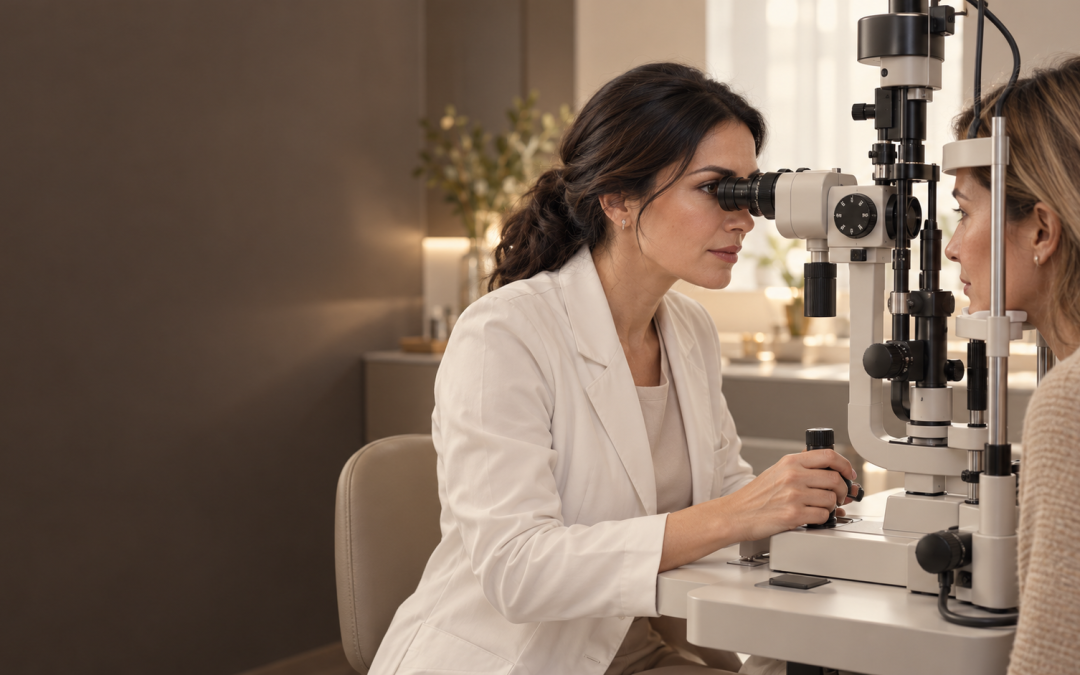
Understanding eyelash extension risks, blepharitis, meibomian gland dysfunction, and eye safety before cosmetic treatments.
Eyelash extensions, lash lifts, eyebrow tinting, and chemical peels are popular cosmetic treatments. However, procedures performed near the eyes deserve special consideration, particularly for individuals with sensitive eyes, chronic dryness, allergies, or existing eyelid conditions.
The eyelids do more than protect the eyes. They contain specialized glands that help maintain a stable tear film, support visual comfort, and protect the ocular surface.
Certain cosmetic products and procedures may cause allergic reactions, eyelid inflammation, or ocular irritation. For patients with existing dry eye disease, blepharitis, or meibomian gland dysfunction (MGD), additional irritation may worsen symptoms.
At Naples Eye & Aesthetics Institute in Naples, Florida, board-certified ophthalmologist Alina K. Stanciu, MD, FACS, FAAO, FASRS, provides comprehensive ophthalmic care and facial aesthetic consultations, with attention to the health and function of the eyes and surrounding tissues.
Can Eyelash Extensions Cause Eye Problems?
Eyelash extensions involve attaching artificial lashes to natural eyelashes using specialized adhesives.
Although many individuals undergo these treatments without complications, potential adverse reactions include:
- Allergic blepharitis: Inflammation of the eyelid margins associated with sensitivity to adhesives or other products.
- Contact dermatitis: Itching, redness, or swelling of the eyelid skin.
- Keratoconjunctivitis: Inflammation affecting the cornea and conjunctiva, sometimes associated with chemical exposure.
- Dry eye irritation: Burning, gritty sensations, or discomfort that may be aggravated by eyelid inflammation.
- Ocular-surface injury: Irritation or injury resulting from accidental contact with adhesives, removal products, or instruments.
A clinical study published in Cornea examined 107 patients who sought ophthalmic care for symptoms following eyelash extensions. Reported complications included keratoconjunctivitis and allergic blepharitis.
Importantly, these findings describe patients who developed complications; they do not establish how frequently complications occur among everyone receiving eyelash extensions.
Research: Ocular Disorders Due to Eyelash Extensions — PubMed
What Is Meibomian Gland Dysfunction, and Why Does It Matter?
The meibomian glands are small oil-producing glands located within the upper and lower eyelids.
Their secretions form part of the tear film and help reduce tear evaporation. When these glands become obstructed or function improperly, the tear film may become unstable, contributing to evaporative dry eye disease.
Common symptoms of meibomian gland dysfunction include:
- Burning or stinging eyes
- Dryness and irritation
- Watery eyes
- Blurry or fluctuating vision
- Red or inflamed eyelid margins
- Discomfort during prolonged screen use
Can Cosmetic Treatments Worsen Meibomian Gland Dysfunction?
Some cosmetic practices may irritate the eyelid margins or make routine eyelid cleansing more difficult.
For example, eyelash extensions and adhesive products can contribute to local irritation or allergic inflammation. Makeup applied close to the eyelid margins may also interfere with proper eyelid hygiene.
For patients already experiencing MGD, blepharitis, or dry eye disease, these factors may aggravate ocular discomfort.
However, not every cosmetic treatment causes meibomian gland dysfunction, and the evidence does not establish that eyelash extensions consistently cause permanent gland damage.
Understanding the patient’s existing eye health is important when evaluating potential risks.
Dr. Alina K. Stanciu’s Published Insights on Dry Eye Disease
In October 2025, an educational article attributed to Dr. Alina K. Stanciu appeared in Southwest Florida’s Health & Wellness Magazine, discussing meibomian gland dysfunction and dry eye disease.
The article addresses the importance of the eyelid’s oil-producing glands in maintaining tear-film stability and explains how gland dysfunction may contribute to ocular discomfort.
This provides a useful medical foundation for understanding why eyelid health matters when considering cosmetic treatments around the eyes.
Related publication: Meibomian Gland Dysfunction (MGD) and Dry Eye Disease — Dr. Alina K. Stanciu
This is a physician-attributed educational publication, not a peer-reviewed clinical trial.
Are Eyelash and Eyebrow Tinting Treatments Safe?
Eyebrow and eyelash tinting products require particular caution because some dyes and color additives may cause allergic reactions or serious eye injuries.
The U.S. Food and Drug Administration (FDA) regulates color additives used in cosmetics around the eyes.
In the United States, silver nitrate is permitted for professional eyebrow and eyelash coloring only under specific restrictions. This does not mean that all products marketed for lash or brow tinting are approved or appropriate for eye-area use.
Consumers should verify product suitability and avoid using ordinary hair dyes on their eyelashes or eyebrows.
FDA guidance: Eye Cosmetic Safety
Can Chemical Peels Cause Eye Irritation?
Chemical peels involve applying exfoliating agents to improve selected skin concerns.
When performed near the eyes, accidental exposure to peeling solutions can cause chemical irritation or injury to the ocular surface.
The level of risk depends on the ingredients, concentration, treatment area, protective measures, and individual patient factors.
Patients with existing ocular-surface disease or recent eye surgery should discuss the timing and suitability of treatments near the eyes with their treating physician.
Chemical injury to the eye is distinct from meibomian gland dysfunction; a chemical peel should not automatically be described as a cause of MGD.
What If You Already Have Dry Eye Disease or Blepharitis?
Patients with existing dry eye disease, blepharitis, ocular rosacea, or meibomian gland dysfunction should be especially attentive to new symptoms after cosmetic procedures.
Before scheduling treatment, consider discussing the following with your ophthalmologist:
- Whether your ocular-surface condition is adequately controlled
- Whether certain products could aggravate existing irritation
- How to maintain appropriate eyelid hygiene
- Whether a recent eye procedure affects treatment timing
- Which symptoms should prompt medical evaluation
An individualized ophthalmic examination can help identify existing concerns and guide appropriate recommendations.
Warning Signs After Eyelash Extensions or Cosmetic Treatments
Mild temporary discomfort should not be confused with persistent or worsening symptoms.
Seek medical evaluation if you experience recurring redness, swelling, burning, discharge, or continued eyelid irritation.
Sudden vision changes, severe eye pain, or significant light sensitivity require urgent medical attention.
If a chemical enters the eye, immediately rinse with clean, lukewarm running water for at least 20 minutes and seek emergency medical care. Do not delay irrigation.
Frequently Asked Questions
Can eyelash extensions make dry eyes worse?
They may aggravate symptoms in some individuals, particularly when adhesives, allergic reactions, or eyelid inflammation contribute to ocular-surface irritation. An examination can help identify the cause.
Can eyelash glue cause blepharitis?
Adhesive-related allergic reactions can cause eyelid inflammation, including allergic blepharitis. Other causes of blepharitis should also be considered.
Can blocked meibomian glands cause watery eyes?
Yes. Poor oil-gland function may contribute to tear-film instability and reflex tearing, although watery eyes can also result from allergies or tear-drainage problems.
Should I avoid eyelash extensions if I have dry eye disease?
Not every patient has the same risk. Individuals with active inflammation, significant dryness, or recurrent irritation should consult their ophthalmologist before undergoing treatments around the eyes.
Can I have cosmetic treatments after cataract surgery or blepharoplasty?
The appropriate timing depends on the procedure, healing progress, and individual medical circumstances. Obtain clearance from your treating surgeon before scheduling treatments near the eyes.
Eye Health and Facial Aesthetic Consultations in Naples, Florida
Cosmetic treatments around the eyes should be considered with an understanding of ocular health, eyelid anatomy, and potential complications.
At Naples Eye & Aesthetics Institute, Dr. Alina K. Stanciu provides individualized ophthalmic evaluations and facial aesthetic consultations for patients seeking informed guidance about eye health and cosmetic concerns.
If you experience persistent dry eyes, eyelid inflammation, or irritation following a cosmetic treatment, an ophthalmic examination can help determine the underlying cause.
Schedule a Consultation
Naples Eye & Aesthetics Institute
Alina K. Stanciu, MD, FACS, FAAO, FASRS
Call (239) 949-2020 to schedule an appointment.
Medical References & Further Reading
Physician-Attributed Educational Publication
Stanciu AK. Meibomian Gland Dysfunction (MGD) and Dry Eye Disease. Southwest Florida’s Health & Wellness Magazine. October 2025.
Peer-Reviewed Research
Amano Y, et al. Ocular Disorders Due to Eyelash Extensions. Cornea. 2012.
Masud M, et al. Eyelid Cosmetic Enhancements and Their Associated Ocular Adverse Effects. Medical Hypothesis, Discovery & Innovation in Ophthalmology. 2019.
Regulatory Reference
U.S. Food and Drug Administration. Eye Cosmetic Safety.
Medical review: Pending review and approval by Alina K. Stanciu, MD, FACS, FAAO, FASRS.